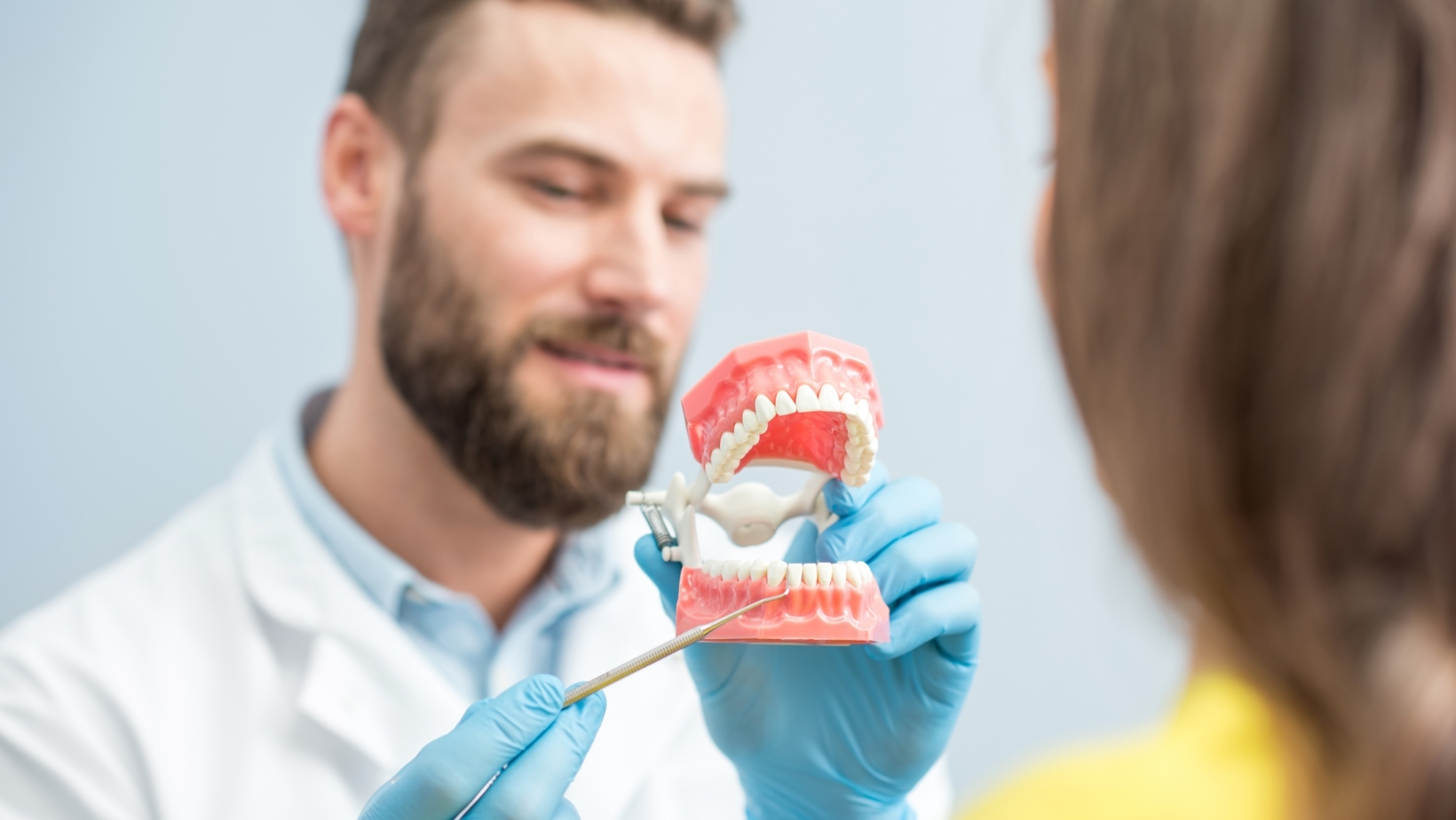
Why Dental Implants Are the Best Solution for Missing Teeth
 By: Britely
Missing a tooth changes everything. You might avoid smiling in photos. Chewing your favorite foods becomes harder. You might even notice your other teeth starting to shift out of place.
Right now, millions of Americans are living with at least one missing tooth, and many are searching for the best way to fix the problem.
Dental implants for missing teeth have become the top choice because they work like your natural teeth and can last your whole life.
This post explains what makes dental implants so special and why they solve problems that other options simply can’t.
Key Takeaways
Dental implants are the best solution for missing teeth because they’re the primary option that prevents jawbone loss, can last 25+ years to a lifetime, and work like natural teeth. With a 94-98% success rate and no damage to surrounding teeth, implants give you back your smile, your ability to eat anything, and your confidence—all with simple daily care.
| Feature | Dental Implants | Dentures | Bridges |
| How Long Do They Last | 25+ years to lifetime | 5-7 years | 7-10 years |
| Prevents Bone Loss | Yes | No | No |
| Feels Like Real Teeth | Yes | No | Mostly |
| Damages Other Teeth | No | No | Yes |
| Success Rate | 94-98% | N/A | 85-90% |
| Daily Care | Brush and floss normally | Remove and soak daily | Special flossing needed |
| Typical Cost Range (Single Tooth) | $3,000-$6,500 | $1,500-$3,000 | $2,000-$6,000 |
What Happens When You Lose a Tooth?
When you lose a tooth, your mouth doesn’t just leave an empty space. Your body starts making changes right away, and most of them aren’t good.
First, your other teeth begin to shift. Think of your teeth like books on a shelf. When you remove one book, the others lean and fall toward the empty spot. Your teeth do the same thing. The tooth above or below the gap starts moving down or up. The teeth on either side tilt inward. Within just a few months, your bite can change completely.
But here’s the bigger problem: your jawbone starts to disappear. Your tooth roots keep your jawbone strong and healthy. When you lose a tooth, that bone no longer gets the exercise it needs. Your body thinks, “We don’t need this bone anymore,” and starts taking it away. Lost teeth cause you to lose about 30% of your jawbone width in the area within the first year.
Here’s what else happens:
- Your face shape can change as bone disappears
- You might look older because your cheeks sink in
- Eating becomes harder, especially with crunchy or chewy foods
- Speaking clearly gets more difficult
- Your remaining teeth become loose as they lose support
- You feel less confident about smiling
The good news? You can stop all of these problems. But you need to act before too much bone is gone. The longer you wait, the harder it becomes to fix.
How Do Dental Implants Actually Work?
Think of a permanent dental implant like a tiny anchor that becomes part of your jaw. It has three main parts, and each one does an important job.
The three parts are:
- The titanium post – This goes into your jawbone and acts like a tooth root
- The abutment – This small connector piece sits on top of the post
- The crown – This is the tooth-colored part you see when you smile
Here’s what makes implants so clever. The titanium post is made from a special metal that your body loves. Over a few months, your jawbone actually grows around the post and holds it tight. Doctors call this “osseointegration,” but you can think of it as your bone giving the implant a permanent hug.
Once your bone has fused with the post, your dentist attaches the abutment. This piece pokes through your gum and gives the crown something to sit on. Finally, the crown goes on top. Your dentist makes it match your other teeth perfectly in color, shape, and size.
Why this design is brilliant:
- The post replaces your tooth root, so your bone stays healthy
- Each implant stands alone and doesn’t need your other teeth for support
- You can brush and floss around it just like a regular tooth
- It handles the same chewing force as your natural teeth
- Nothing slips, clicks, or moves when you eat or talk
The result? You get permanent artificial teeth that work so well, you’ll forget they’re not your original teeth. Most people can’t tell the difference between an implant and a natural tooth just by looking. Even dentists need X-rays to spot them.
The Problem with Dentures and Bridges
For years, dentures and bridges were the primary solutions for replacing missing teeth. While they helped many patients, both came with limitations.
Dentures sit on top of your gums like a retainer. They don’t attach to anything permanent. Most people need sticky paste or adhesive to keep them in place. Even with an adhesive, dentures can slip when you eat or talk. Many people avoid certain foods because they’re worried their dentures will move. Corn on the cob? Forget it. Apples? Too risky. Steak? You’ll be chewing for an hour.
Dentures also speed up bone loss. Remember how your jawbone needs pressure from tooth roots to stay strong? Dentures don’t provide that pressure. Your bone keeps shrinking, which makes your dentures fit worse over time. You may need new dentures every 5 to 7 years as your jaw shape changes.
Here are the biggest denture complaints:
- They slip and click when you least expect it
- You taste less food because plastic covers your palate
- Sore spots develop where they rub against your gums
- You need to take them out every night for cleaning
- They make you look older as your face loses support
Bridges have different problems. To put in a bridge, your dentist must grind down the two healthy teeth on either side of the gap. They file away the outer layer of these perfectly good teeth so crowns can fit over them. You’re destroying healthy teeth to replace a missing one.
Those ground-down teeth become weaker. Food gets trapped under the bridge, making the supporting teeth more likely to decay. If one of those support teeth fails, you lose the whole bridge. Then you’re missing three teeth instead of one.
Bridges also don’t stop bone loss. The fake tooth hangs in the gap without touching the bone below. Your jawbone in that spot keeps shrinking. After 7 to 10 years, most bridges need to be replaced.
Both options force you to choose between convenience and your long-term oral health. That’s why so many people are looking for something better.
Why Implants Beat Every Other Tooth Replacement Option
They Last Longer Than Anything Else
Dental implants for missing teeth give you the best long‑term value because they are designed to last decades, often for life. A single implant typically stays strong for 25+ years; you may only need to replace the crown after 10–15 years due to normal wear.
By comparison, dentures usually need to be remade every 5–7 years as your jawbone shrinks and the fit loosens, while bridges often last 7–10 years before the supporting teeth weaken or the bridge fails. So even though implants cost more upfront, they often end up costing less—and causing far less hassle—over 20–30 years than repeatedly replacing dentures or bridges.
You Keep Your Jawbone Healthy
Dental implants are the only tooth‑replacement option that actually protects your jawbone. After tooth loss, the bone in that area starts to shrink; studies show you can lose around 30% of bone width in the first year alone. Over time, this leads to a “sunken” look, loose remaining teeth, and a bite that feels unstable.
The implant post acts like a new tooth root, sending chewing pressure into the bone and telling your body to keep that bone strong. This is especially important for dental implants for seniors, because bone loss may speed up with age; preserving bone helps your face keep its natural shape and keeps future implant options open. Dentures and bridges sit on the gums or hang over the gap, so the bone keeps disappearing underneath.
They Feel and Work Like Real Teeth
Imagine eating an apple without worry. Laughing with friends without thinking about your teeth. Speaking clearly without any clicking sounds. That’s what life is like with permanent dental implants.
Studies show dental implants restore about 80% of the natural bite force. That means you can eat steak, apples, corn on the cob, and crunchy vegetables without any trouble. You don’t need to cut your food into tiny pieces or stick to soft meals. Your diet goes back to normal.
Speaking feels natural, too. Your tongue touches the implant crown just like it would touch a real tooth. You don’t have plastic covering the roof of your mouth like with dentures. Words come out clearly. No whistling sounds. No muffled speech.
The impact of missing teeth on oral health goes beyond just the gap. When you have all your teeth working together, your jaw works correctly. You can chew evenly on both sides. Your jaw joint stays balanced and comfortable. Many people with missing teeth develop jaw pain because they chew awkwardly on one side. Implants fix this problem.
You also gain confidence back. You can smile big in photos. You can eat at restaurants without anxiety. You can kiss your partner without worrying. These might sound like small things, but they make a huge difference in your quality of life.
Patient surveys show that 96% of people with implants are happy with their results. They report feeling more confident and enjoying life more. Many say they wish they had gotten implants sooner.
Your Other Teeth Stay Safe
One of the biggest benefits of dental implants for missing teeth is that they don’t sacrifice healthy teeth to fix a gap. Traditional bridges require the dentist to shave down the two neighbouring teeth so crowns can be placed over them, which permanently removes protective enamel and puts extra chewing stress on those teeth.
Implants stand on their own; your doctor places the implant directly in the space where the tooth was, leaving the surrounding teeth untouched and easier to keep clean. You can brush and floss around an implant just like a natural tooth, instead of using special tools to clean under a bridge.
They’re Easy to Take Care Of
You might think permanent artificial teeth need complicated maintenance routines. But caring for implants is surprisingly simple.
Brush your implants twice a day with regular toothpaste and a soft toothbrush. Floss between them once a day. That’s it. You treat them exactly like your natural teeth. No soaking in cups of cleaning solution overnight. No sticky adhesives to apply. No special tools required.
Compare this to dentures. Every night, you need to take them out and brush them. Then you soak them in cleaning solution while you sleep. You need to clean your gums, too. In the morning, you apply adhesive paste and put the dentures back in. Throughout the day, you might need to reapply adhesive if it feels loose. Food particles get trapped under dentures, so you often need to remove them for cleaning after meals.
See your dentist every six months for regular checkups and cleanings, just like you would for natural teeth. Your dentist will check that everything is healthy and clean around your implants. These routine visits help your implants last even longer.
Simple care tips:
- Use a soft-bristle toothbrush to avoid scratching
- Floss gently around the implant crown
- Avoid chewing ice or hard candies (same rule as natural teeth)
- Don’t smoke, as this can hurt implant success
- See your dentist if anything feels loose or painful
The low-maintenance nature of implants saves you time and hassle. You get your life back without adding complicated daily routines.
The Success Rate Is Really High
The success rate for dental implants is impressive: 95% to 98% of implants succeed long-term. That means almost everyone who gets an implant has a positive outcome.
These numbers come from tracking thousands of patients over many years. According to studies, they found that after three years, 98.9% of implants are still working perfectly. Even after 10 years, over 90% of implants are still going strong. These studies have followed patients for 20 to 40 years and found that most implants last that entire time.
Several things help implants succeed:
- Your age and health: People in good overall health tend to heal better
- Not smoking: Smokers have a higher failure rate because smoking slows healing
- Good oral hygiene: Keeping your mouth clean prevents infection around the implant
- Bone quality: Having enough healthy jawbone gives the implant a strong foundation
- Dentist experience: Skilled dentists who place many implants have better success rates
Your dentist can look at your specific situation and predict how likely your implant is to succeed. Most people are good candidates. Even factors like age work in your favor. Studies show that dental implants work well for people in their 70s and 80s.
If an implant does fail, it usually happens in the first few months when the bone is still fusing to the titanium. Late failures are rare. And if a failure does occur, your dentist can often place a new implant in the same spot after a healing period.
Patient satisfaction surveys tell an even better story. About 96% of people with implants say they’re happy, and around 87% of patients feel the cost was worth it. These high satisfaction numbers show that implants deliver on their promise of giving you back your smile and confidence.
Want to see how dental implants for missing teeth compare to dentures and bridges in your specific case? Scheduling a consultation form is all you need to get started.
What to Expect: The Dental Implant Process
Getting dental implants for missing teeth takes a few months, but each step is straightforward and focused on long‑term results.
Step 1: Consultation and 3D Planning
Your implant doctor examines your mouth, reviews your health history, and uses X‑rays or 3D scans to see how much bone you have and where each implant should go. If there isn’t enough bone, they may recommend a graft first to build a stronger foundation. You’ll leave this visit with a personalized treatment plan and a clear cost estimate.
Step 2: Implant Placement Surgery
During surgery, the doctor numbs the area (and can offer sedation if you’re anxious), then gently places the titanium post into your jawbone and closes the gum around it. Most people report mild soreness for a few days that is manageable with over‑the‑counter pain relief and a soft‑food diet.
Step 3: Healing and “Test Drive” Temporaries
Over the next 3–6 months, your bone grows around the implant and locks it in place, a process called osseointegration. At Britely, many patients receive same‑day temporary teeth, so you can test drive your smile and bite while everything heals before your final teeth are crafted in our in‑house lab.
Step 4: Abutment and Final Crown
Once healing is complete, a small connector (abutment) is attached to the implant, and a custom crown is designed to match your other teeth. When the crown is fitted, your implant functions like a natural tooth, letting you chew, smile, and speak with confidence for years to come.
Most people are surprised by how manageable the process feels day to day—and how worthwhile a few months of treatment are for a solution that can last 25 years or more.
Are Dental Implants Right for You?
Most people make good candidates for dental implants. But your dentist will check several things to make sure implants are the best choice for your situation.
You’re likely a good candidate if:
- You have one or more missing teeth
- Your jawbone has finished growing (usually by age 18 or older)
- You have enough bone in your jaw, or you’re willing to get a bone graft
- Your gums are healthy and free from disease
- You don’t smoke, or you’re willing to quit before treatment
- You’re committed to good oral hygiene
- You’re in generally good health
Age alone rarely rules anyone out. Dental implants for seniors in their 70s and 80s often do very well, with high success rates when overall health and bone quality are good. Certain medical conditions—like diabetes, osteoporosis, heart issues, or past cancer treatment—may require extra planning with your medical team, but many patients with these conditions still qualify once things are stable.
Some factors can lower success if they aren’t addressed first, including active gum disease, heavy smoking, uncontrolled grinding, or severe bone loss. Your implant doctor will use X‑rays or 3D scans to assess your bone, talk honestly about your health and habits, and recommend steps such as gum treatment, a nightguard, or bone grafting if needed before treatment.
On the money side, single‑tooth dental implants for missing teeth typically fall in the $3,000–$6,500 range, depending on bone needs and the type of crown. Many insurance plans still limit implant coverage, but Britely helps with transparent written estimates, financing options, and monthly payment plans so costs are clear up front rather than a surprise later.
The best way to know if implants are right for you is a consultation with an implant‑focused team. At Britely’s studios in Scottsdale, Minneapolis, Milwaukee, and Jacksonville, your visit includes a thorough evaluation, imaging, and time to ask questions so you can decide with confidence whether dental implants are the right long‑term solution for your missing teeth.
Conclusion
Dental implants for missing teeth stand out as the clear winner when you compare all your options. They’re the only solution that protects your jawbone, lasts decades, and functions exactly like your natural teeth. Yes, they cost more upfront. Yes, the process takes a few months. But you get permanent results that improve your health, your appearance, and your confidence for the rest of your life.
You deserve to eat what you love without worry. You deserve to smile big in photos. You deserve teeth that work as hard as you do. Implants give you all of that and more.
If you’re ready to explore how dental implants can transform your smile, Britely connects you with experienced dental professionals who can evaluate your needs and create a personalized treatment plan. Take the first step toward getting your confidence back.
Frequently Asked Questions
Can dental implants get cavities like natural teeth?
No. Implants can’t decay, but the surrounding gums can get infected if you don’t clean well. Good brushing and flossing prevent peri-implantitis and keep implants healthy.
How painful is dental implant recovery?
Usually mild. Expect soreness for a few days, like a tooth extraction. Swelling peaks around day two, and many people return to work in 1–2 days with over-the-counter pain relief.
What happens if a dental implant fails?
Failure is rare and usually happens early. The implant is removed, the area heals, and a new one is placed later—most second attempts are successful.
Can you get implants if you’ve had bone loss for years?
Yes. Bone grafting can rebuild the area so implants are possible. It adds healing time but makes treatment an option for many patients.
Do dental implants set off airport metal detectors?
It’s very unlikely. Dental implants typically don’t set off airport metal detectors.